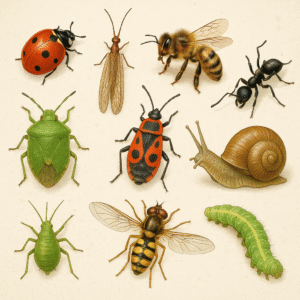

Recognizing beneficial insects in your garden is about shifting your perspective. Rather than reaching for the spray bottle at the first sign of movement, take a closer look. You might just discover a complex world of tiny allies helping your plants grow stronger every day.
Stay curious — and next time you spot a bug, try asking not “How do I get rid of it?” but “What is it doing here?” You might be surprised by the answer.
🐝 1. Bees (Apis mellifera + Native Bees)
What they do: Pollinate flowers, fruits, and vegetables.
How to identify:
- Fuzzy bodies with yellow and black stripes (honeybees)
- Solitary bees may be smaller, with metallic green or blue bodies
- Often found buzzing around open flowers, especially in the morning
Where you’ll see them: Flower beds, vegetable blossoms, wild edges of your yard
📝 Fun fact: Many native bees, like mason bees (Osmia lignaria), are even more efficient pollinators than honeybees!
🐞 2. Ladybugs (Coccinellidae)
What they do: Devour aphids, whiteflies, and soft-bodied pests.
How to identify:
- Round, domed bodies with red or orange wing covers and black spots
- Larvae look like small alligators: black with orange or yellow markings
Where you’ll see them: On leaves where aphids are present — especially roses, beans, and lettuce
📝 CB Tip: If you see clusters of tiny orange eggs on the underside of leaves, don’t squash them — those are baby ladybugs!
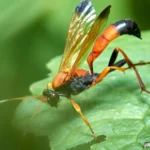
🐝 4. Parasitic Wasps (e.g., Cotesia marginiventris)
What they do: Lay eggs in pest insects like caterpillars or aphids.
How to identify:
- Tiny, often less than ½ inch long
- Thin waists, usually black or metallic
- Not aggressive to humans
- You may see evidence of their work before the wasps themselves — such as aphid mummies (dry, brown husks)
Where you’ll see them: Near pest outbreaks or drawn to flowering herbs like fennel, coriander, and yarrow
🐛 5. Ground Beetles (Carabidae)
What they do: Hunt soil-dwelling pests like slugs, cutworms, and grubs.
How to identify:
- Shiny black or dark brown beetles
- Flattened, elongated bodies
- Fast movers — often seen at night
Where you’ll see them: Under rocks, mulch, or garden debris
📝 Leave some leaf litter or stone borders — they provide shelter for ground beetles to thrive
🌼 Encouraging Beneficial Insects
Want more good bugs in your garden? Here’s how to invite them in:
- Plant a variety of flowering plants, especially those with small, open blooms (like dill, calendula, and buckwheat).
- Avoid pesticides, especially broad-spectrum ones — they harm the helpful bugs as much as the harmful ones.
- Leave some wild space — beneficial insects need habitat too.
- Provide water in shallow dishes with pebbles for insects to perch on.